Solar Tower : How Does It Work?

In the small town of Mildura, located in southeastern Australia between Melbourne and Adelaide, engineers once proposed building a megastructure with the potential to generate enough electricity to power around 200,000 Australian homes. The proposed engineering marvel was a 1-kilometre-tall (3,281 ft) tower capable of generating approximately 200 megawatts (MW) of electricity. To understand just how tall this structure would be, compare it with some of the world's tallest buildings and structures as of 2026.
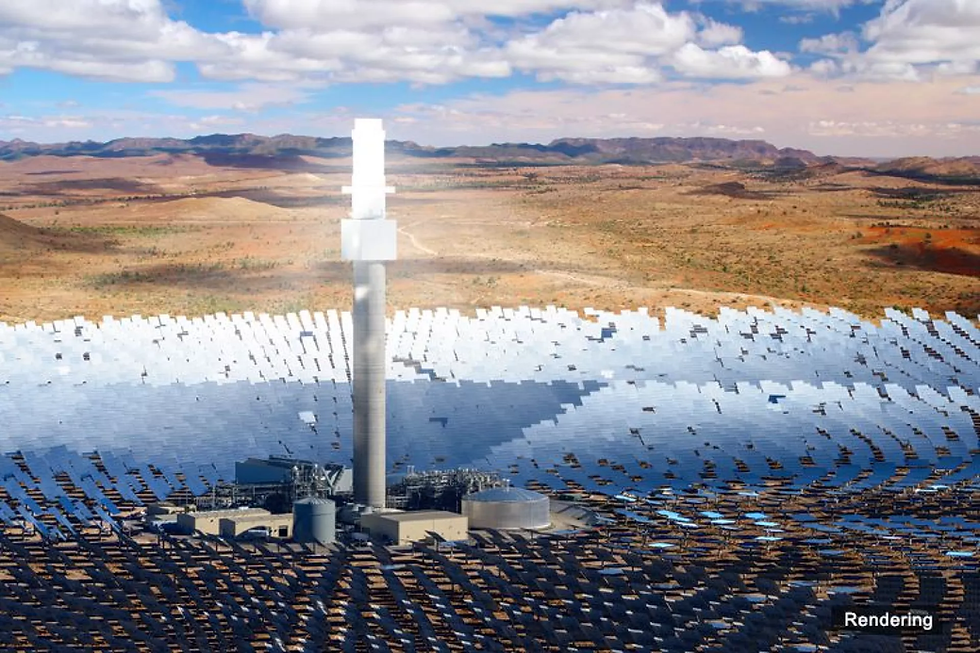
This structure, known as the Solar Tower, would stand taller than almost all of them.
The idea behind it is surprisingly simple.
Imagine a giant hollow chimney rising from the ground and stretching 1,000 metres (3,281 ft) into the sky. Around its base sits a massive transparent canopy approximately 7 kilometres (4.35 miles) in diameter, covering an area of about 38 square kilometres (14.7 square miles). That is roughly equivalent to more than 5,000 football fields. The canopy is made from transparent materials that allow sunlight to pass through and warm the ground beneath. The heated ground then warms the air trapped underneath the canopy.
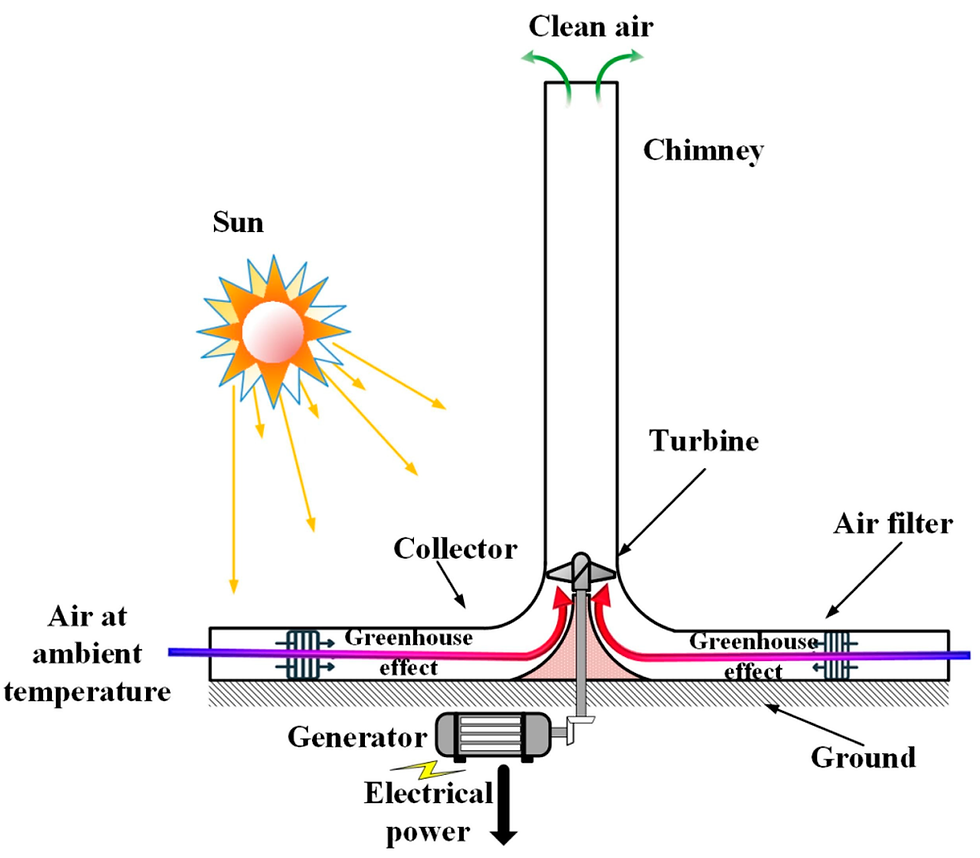

As hot air rises, it naturally seeks an escape route. The only outlet is the enormous chimney at the centre. The temperature difference between the hot air beneath the canopy and the cooler air higher up the tower creates a powerful upward airflow.
Engineers estimated that this airflow could reach speeds of around 55 km/h (34 mph). To harness this constant stream of moving air, 38 wind turbines would be installed around the base of the tower. Together, they could generate approximately 200 MW of electricity without burning any fuel and without producing direct carbon emissions.

The concept of a solar chimney power plant dates back more than a century. One of the earliest published proposals appeared in 1903 by Spanish military officer Colonel Isidoro Cabanyes. Later, German engineers and researchers refined the concept, but the technology and economics of the time prevented large-scale construction.
Interest in alternative energy sources surged during the oil crises of the 1970s, bringing renewed attention to ideas such as the Solar Tower.
The Sun itself provides an almost unimaginable amount of energy. Every second, it converts roughly 657 million tonnes of hydrogen into helium through nuclear fusion. About 4 million tonnes of mass are converted directly into energy according to Einstein's famous equation:
E = mc²
Only a tiny fraction of this energy reaches Earth, yet it is still enough to power human civilization many thousands of times over. Harnessing even a small portion of that energy efficiently remains one of humanity's greatest engineering challenges.
Given the advantages of the Solar Tower, why has it never become a reality?
The answer lies in two major obstacles: engineering challenges and financial viability.
A tower standing 1 kilometre high would face extreme structural stresses. At those altitudes, wind speeds can exceed 200 km/h (124 mph) during severe weather conditions. Engineers would likely need to stabilize the structure using massive support systems and advanced construction techniques.
The project was expected to require hundreds of thousands of tonnes of concrete and steel, with construction lasting several years.
The biggest challenge, however, is cost.
While the tower could produce clean electricity for decades, the initial investment would be enormous. Revenue from electricity sales alone might not be enough to justify the project. Supporters suggested additional income streams such as tourism, research facilities, and carbon credits, but questions about long-term profitability remained.
As a result, despite its elegant design and environmental benefits, the Solar Tower has remained one of the world's most fascinating unbuilt engineering projects. Although no full-scale Solar Tower has yet been built, smaller experimental solar chimney plants have successfully demonstrated that the concept works in practice, leaving the question of economics—not physics—as the main hurdle.
So, what do you think? Could ideas like the Solar Tower become economically viable in the future? Send us your thoughts at theexploreroffice@gmail.com.
References
Schlaich, J., Bergermann, R., Schiel, W., & Weinrebe, G. (2005). Design of Commercial Solar Updraft Tower Systems—Utilization of Solar Induced Convective Flows for Power Generation. Journal of Solar Energy Engineering, 127(1), 117–124. https://doi.org/10.1115/1.1823493
Haaf, W., Friedrich, K., Mayr, G., & Schlaich, J. (1983). Solar Chimneys: Part I – Principle and Construction of the Pilot Plant in Manzanares. International Journal of Solar Energy, 2(1), 3–20. https://doi.org/10.1080/01425918308909911
NASA Solar System Exploration. (2025). Sun: Overview. Retrieved June 2026 from https://science.nasa.gov/sun/
Encyclopaedia Britannica. Solar Chimney. https://www.britannica.com/technology/solar-chimney
Australian Broadcasting Corporation (ABC). The Solar Tower Proposal for Mildura. https://www.abc.net.au


Comments