Iceland without Ice. Greenland without Green. What happened?

If you see the image below, you’ll realize that there is no ice on Iceland, and there’s barely any green on Greenland.

What’s going on here? So how did this mix-up happen?
Back in the ninth century, Norwegian Vikings first landed on Iceland. Unfortunately for them, they arrived in winter. All they saw was snow and frozen land, so they called it “Iceland”. Back then, explorers usually named places after what they noticed first. (Florida, for example, got its name from Spanish explorers because they arrived during springtime, when flowers were everywhere.)
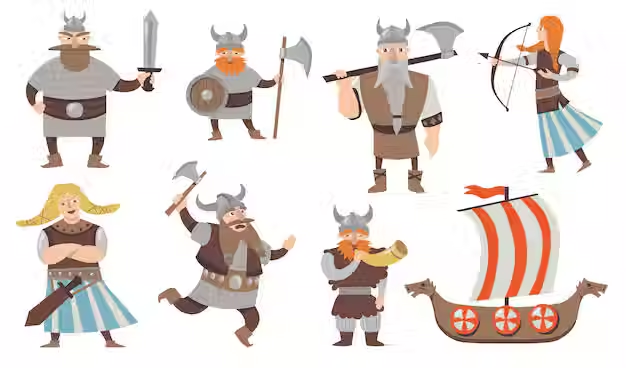
But the real twist came years later. A Viking named Erik the Red got kicked out of Iceland for his crimes. Sailing west, he stumbled upon a giant frozen island. Erik knew nobody would be excited to settle in a land of endless ice, so he pulled off one of history’s greatest marketing tricks—he named it Greenland, making it sound like a paradise.
And guess what? It worked. People actually moved there, fooled by the name.
So the next time you look at a map, remember: Greenland and Iceland aren’t geography mistakes—they’re the result of a thousand-year old Viking prank that still confuses us today.
Iceland | Greenland | |
Population | ~390,000 | ~56,000 |
Volcanoes | Active | Frozen |
Wildlife | Puffins | Polar Bears |
Founded by | Vikings | Erik the Red |
References:
Wikipedia contributors. Erik the Red. Wikipedia, The Free Encyclopedia. Last modified January 31, 2026. Retrieved February 24, 2026, from https://en.wikipedia.org/wiki/Erik_the_Red


Comments